
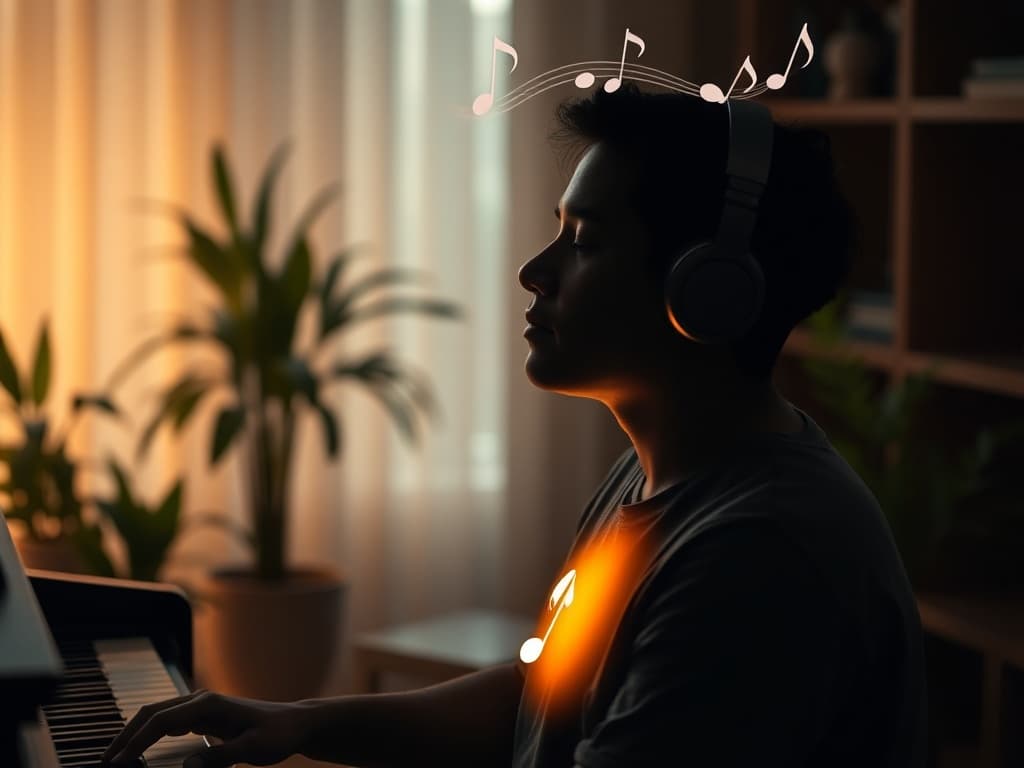
Not everyone wants to sit in a chair and answer the question, “So… how does that make you feel?”
For some people, talking about emotions feels awkward, exhausting, or just plain unnatural. They’d rather send a song, blast a playlist in the car, or sit quietly with headphones on than explain what’s going on inside. And honestly? That’s completely valid.
Music therapy exists for exactly that reason.
When Words Feel Like Too Much
Some people process internally. Others were never taught the language of emotions. And some just don’t enjoy dissecting their feelings out loud. Music therapy doesn’t demand a deep emotional monologue. Instead, it offers another route, through rhythm, melody, and sound.
You don’t have to say, “I’m overwhelmed.” You can play a fast, chaotic rhythm. You don’t have to explain heartbreak. You can write a lyric that says everything in three lines.
Music becomes the translator.
Sound Speaks Before Speech
Music activates emotional centers in the brain faster than language does. A single chord progression can unlock a mood before you’ve even identified it. That’s why a song can hit you in the chest before you know why.
In a music therapy session, you might:
Build a playlist that mirrors your inner world
Play simple percussion to release tension
Write lyrics without overthinking them
Sit and listen intentionally
No forced eye contact. No emotional interrogation. Just sound doing what it does best.
It’s Not About Being “Deep”
You don’t have to be poetic. You don’t have to cry. You don’t even have to talk much. Some sessions include conversation, but it happens naturally, often after the music has already done the heavy lifting.
For people who “hate talking about feelings,” music therapy can feel less like therapy and more like finally breathing.
Healing, Your Way
There’s no rule that says healing must happen through long conversations. For some, it happens in a bassline. In a drumbeat. In a song played on repeat.
If you’d rather press play than unpack your emotions sentence by sentence, music therapy might be your language.
And that counts.

