
By: Razia Ali Clinical Nutritionist | Dietitian | Public Health Nutritionist | Diabetic Educator | Nutrigenomic Counsellor | Clinical Researcher Dar-es-Salaam, Tanzania Email: raziaali52110@gmail.com
Introduction
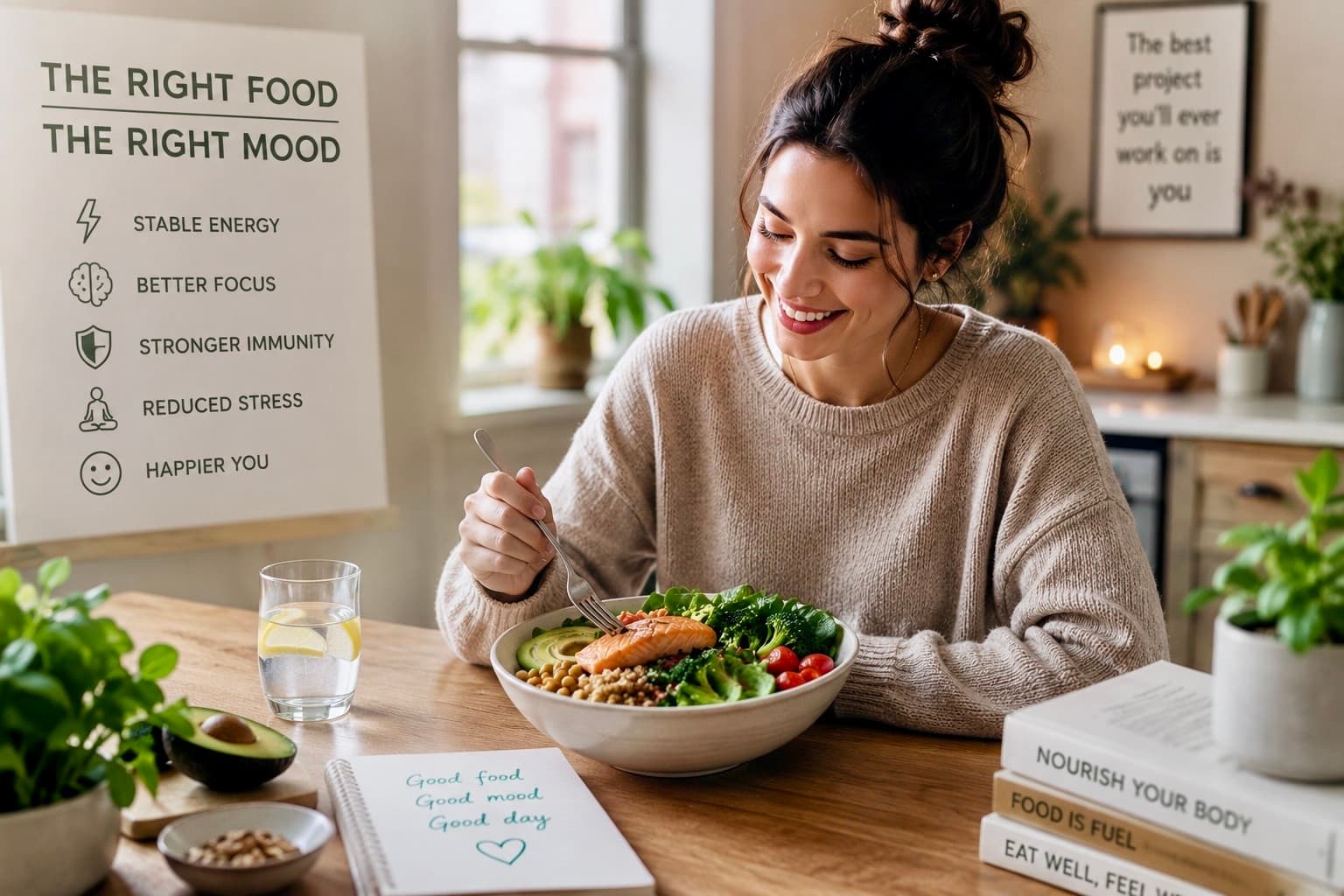
You don’t just eat food — you feel it. From irritability to calmness to crushing fatigue, your meals shape your brain chemistry every single day. While we often think “mood” comes from stress or hormones, science now confirms that your gut and brain speak constantly through the gut–brain axis, and what you eat decides the tone of that conversation.
How Food Influences Your Mood
- Your Brain Needs the Right Fuel
Your brain runs on glucose. When blood sugar swings wildly — from sugary foods, refined carbs, and erratic meals — your mood crashes. This triggers irritability, anxiety, and difficulty concentrating.
- Serotonin Lives in the Gut
About 90% of serotonin, the “feel-good, calm-and-happy” hormone, is produced in your gut. Foods rich in tryptophan (eggs, almonds, bananas, oats) help build serotonin and elevate mood.
- Omega-3s Support Emotional Balance
Omega-3 fatty acids improve cell signaling in the brain and reduce inflammation — a key factor linked to depression (Calder, 2020).
- Micronutrient Deficiencies = Low Mood
Low levels of:
Iron → fatigue, lethargy
Vitamin D → seasonal depression
Magnesium → anxiety and muscle tension
Vitamin B12 → mood swings, poor memory
are all strongly linked to negative emotional states.
Practical Examples
A breakfast of refined toast + tea spikes blood sugar → sudden drop → irritability by mid-morning.
A meal of oats + nuts + banana gives slow, steady glucose release → stable mood and energy.
Adding fatty fish twice weekly improves focus and emotional resilience within weeks.
Conclusion
Your mood isn’t random — it’s nutritional. Every meal communicates with your brain. Choose foods that nourish your gut, stabilize your blood sugar, and support your neurotransmitters… and your emotions will follow.
References
Calder, P.C. (2020). Omega-3 fatty acids and inflammatory processes. Proceedings of the Nutrition Society, 79(3), 1–15.
O’Neil, A. et al. (2014). Relationship between diet and mental health. Nutritional Neuroscience, 17(2), 59–65.
Harvard Health Publishing (2023). Food and your mood.

