
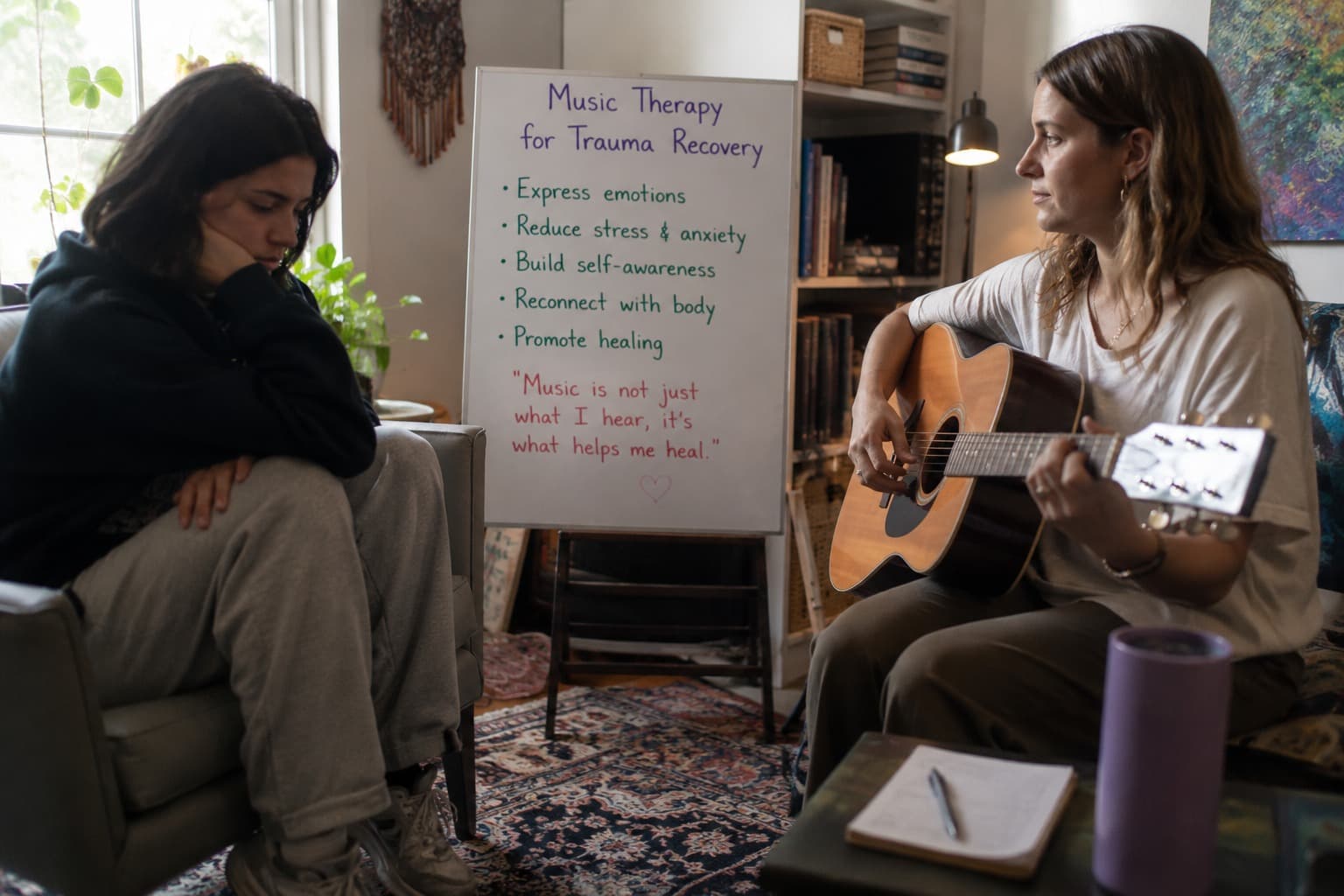
Trauma can leave people feeling overwhelmed, disconnected, or unable to put their experiences into words. For many, talking about painful memories feels intimidating or simply impossible. This is where music therapy offers a gentle and powerful alternative: healing without having to explain everything.
Music has a unique ability to reach parts of the brain connected to emotion and memory. In music therapy, individuals work with a trained therapist who uses listening, songwriting, rhythm, or simple instruments to create a safe space for expression. There is no pressure to describe what happened. Instead, feelings can move through melody, rhythm, and sound.
Listening to carefully selected music can help regulate the nervous system, reducing anxiety and calming the body’s stress response. Slow tempos and soothing harmonies encourage relaxation, while rhythmic patterns can help restore a sense of stability and control. For someone who feels overwhelmed, even a steady beat can be grounding.
Creating music, whether through drumming, humming, or writing lyrics, allows emotions to surface in manageable ways. A person might not be ready to speak about fear or grief, but they may be able to express it through a minor chord progression or a simple rhythm. The music becomes a container for emotions, holding them safely without forcing direct confrontation.
Importantly, music therapy respects each individual’s pace. Healing does not require retelling every detail. Instead, it focuses on rebuilding a sense of safety, connection, and self-expression. Over time, this can help restore confidence, strengthen coping skills, and reconnect people to joy and meaning.
In a world that often demands explanations, music therapy offers something different: a reminder that healing can happen in sound, silence, and shared presence, no detailed story required.

